

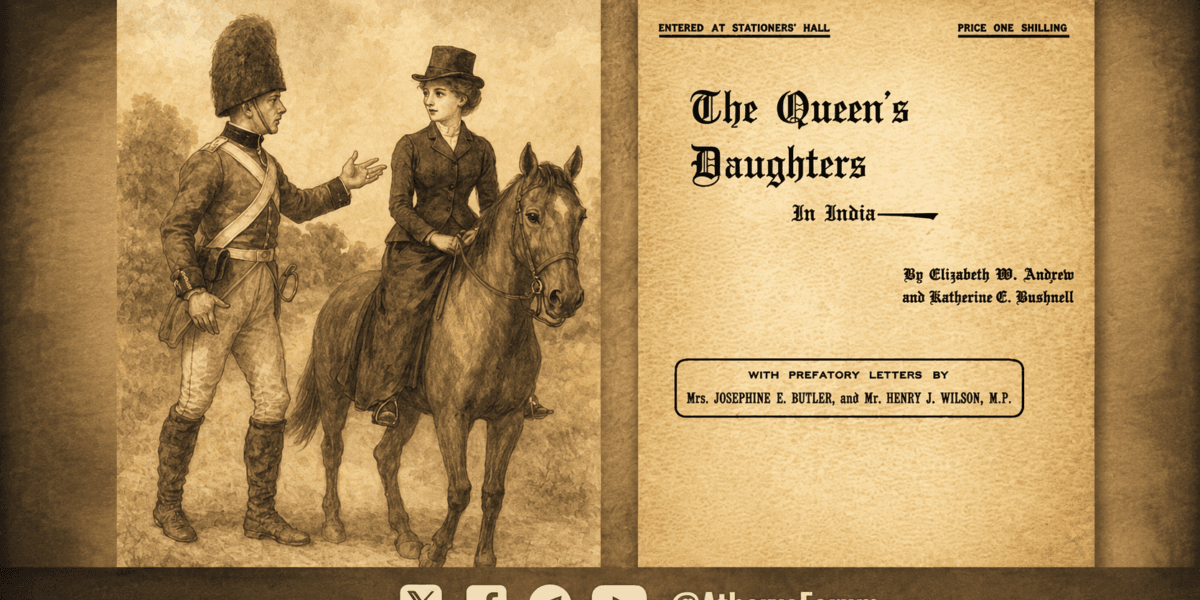

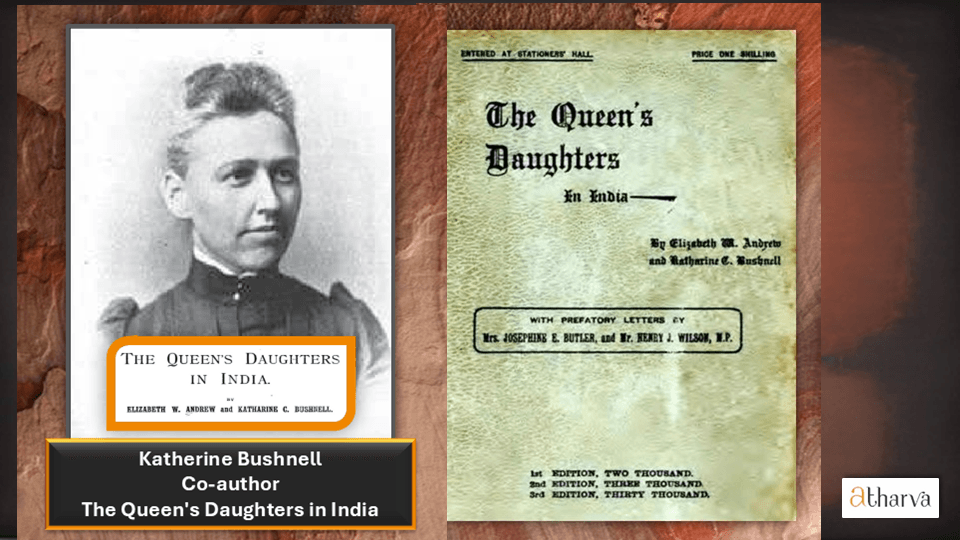
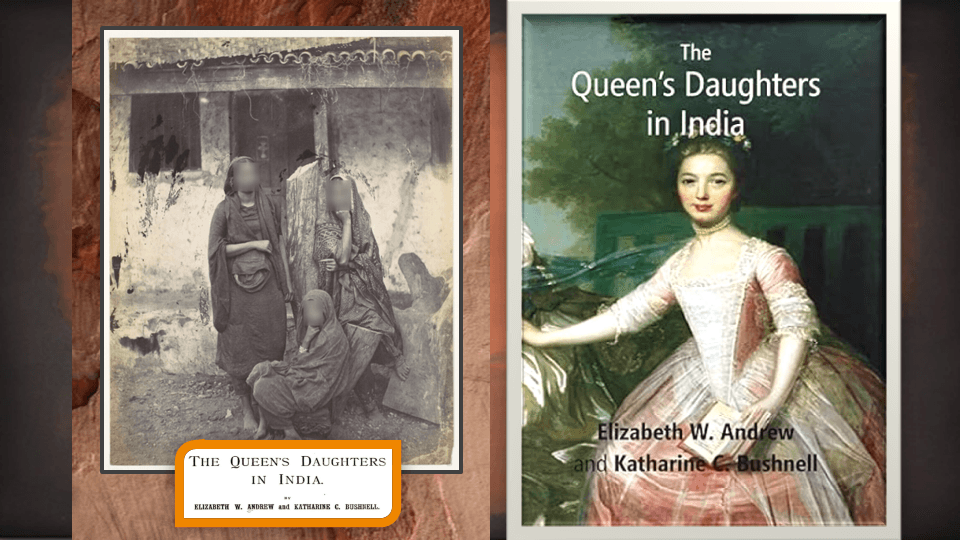
“The Queen’s Daughters in India,” is a book that was published in 1899 by Katharine Bushnell and Elizabeth Andrew. The book is about the treatment of Indian women who were forced into prostitution for the indulgence of “young British soldiers” across several “cantonments” – the compulsory and periodic physical examinations that these women had to go through, the Acts that enforced this with no concern for their dignity, and the authorities who encouraged it so that the British soldiers can indulge their sexual appetite. We will come to the intriguing title of the book in due course.
The authors, Bushnell and Andrew, were both Americans, staunch Christians, and avid reformers who were a part of the Women’s Christian Temperance Union. The preface of the book, which says, “This little book is written under a deep sense of obligation to the womanhood of the world, but more especially under a sense of duty to God,” gives you an idea about their interests. Bushnell, specifically, was a physician, writer, and missionary who had served in China and parts of the US before she visited India, and later, Australia and New Zealand.
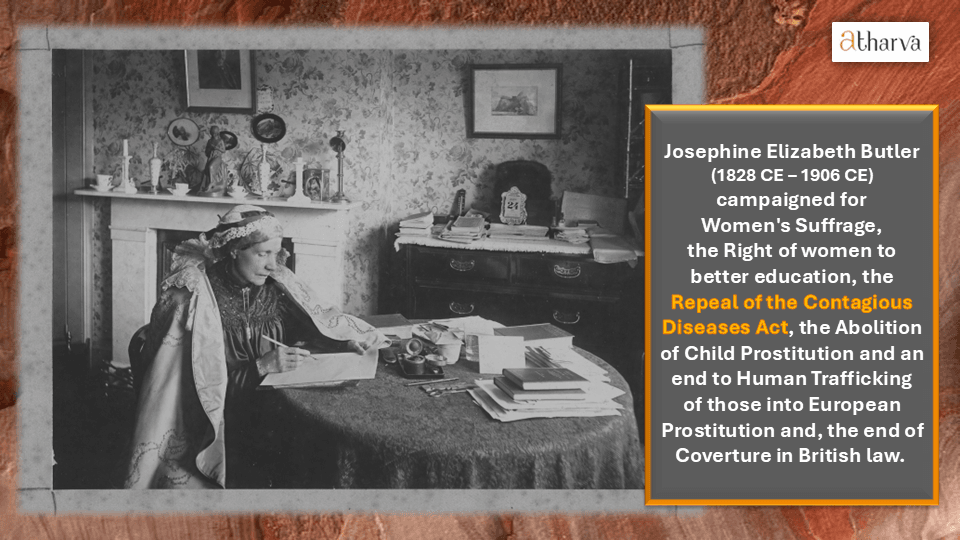
Josephine Butler, to whom the book is dedicated, suggested Bushnell visit India and investigate the conditions of women forced into prostitution in the cantonments. Butler was a key force behind the repeal of the Contagious Diseases Acts, which form a core theme of the book and this talk. About the book, Butler wrote, “I wish that every woman in the United Kingdom could read this little book. It tells…the terrible truth concerning the treatment of certain Indian women, our fellow-citizens and sisters, by the British Government. I believe if that truth were known throughout the length and breadth of our land, it would become impossible for our rulers to continue to maintain the cruel and wicked Regulations by which these Indian women are enslaved and destroyed.”
I will refer to solely Bushnell in the context of the book, instead of Bushnell and Andrew, for the sake of brevity.
INTRODUCTION
“Queen’s Daughters” starts with an interesting anecdote for “a system for the apportionment of native women to regiments,” or in plain words, ensuring the availability of Indian women as prostitutes for British soldiers.
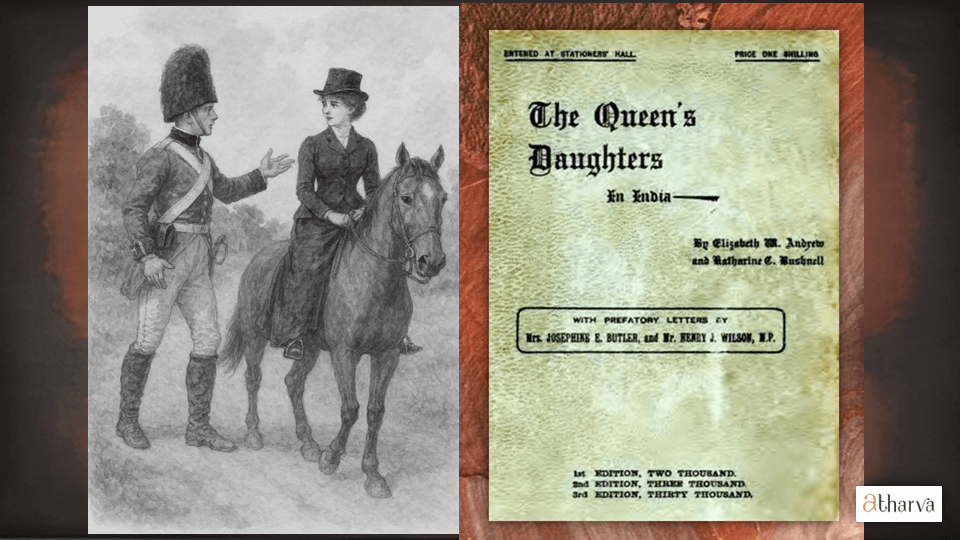
In 1856, so the anecdote goes, a British lady was riding out on horseback in Ambala, alone, when the bridle of her horse was seized by a lustful British soldier. She remonstrated with him and warned him that injuring someone with a social status like hers would utterly ruin his future and he would be dismissed from the army. The soldier pleaded that there was an “excuse for vice when soldiers were not allowed to marry”. Later, she talked with high military officials about the “necessity of protecting high-born ladies from such risks by furnishing for sensual indulgence to the British soldiers.” The result, therefore, was the “system for apportionment of native women to regiments.” Bushnell noted that they “have never been able to verify the exact truth of this incident, but it probably has a basis in fact.”
The anecdote unfolds in 1856: a British lady, riding alone on horseback in Ambala, had her horse’s bridle seized by a lustful British soldier. She remonstrated sharply, warning that harming a woman of her social standing would shatter his future and cost him his place in the army. The soldier pleaded that there was an “excuse for vice when soldiers were not allowed to marry”. Later, she talked with high military officials about the “necessity of protecting high-born ladies from such risks by furnishing for sensual indulgence to the British soldiers.” The result, therefore, was the “system for apportionment of native women to regiments.” Bushnell noted that they “have never been able to verify the exact truth of this incident, but it probably has a basis in fact.”
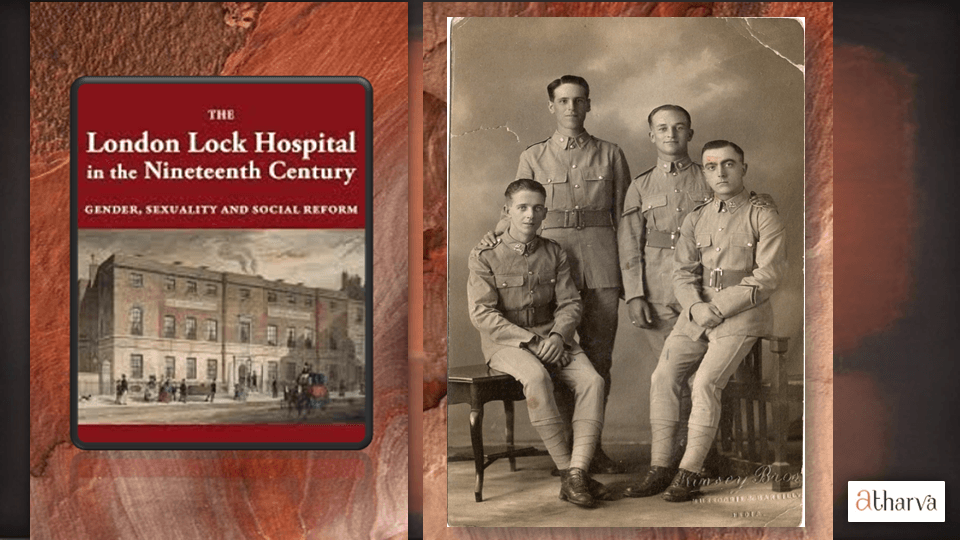
The truth, as is recorded in various sources, is that the system was devised to ensure that “young British soldiers” had a way to satisfy their lust. However, this goes much earlier than 1856 right from the days of the East India Company when British soldiers were stationed in India. The soldiers were young, not allowed to marry, and the other alternative, homosexuality, was a crime and “dreaded as a threat to military discipline”. The only alternative, therefore, was the system of prostitution with Indian women, and the biggest issue with this was the fear of infection from sexually transmitted diseases, STDs, such as syphilis and gonorrhoea.
As you would be aware, by the turn of the 19th century, the East India Company carried out the administration through the Presidencies of Bombay, Madras, and Bengal. The Cantonments, which were military areas that included regiments, barracks, training grounds, and other facilities, were administered by military authorities. While the Presidencies had a Governor, or a Governor General in the case of Bengal, Cantonments had a Commanding Officer. With the Government of India Act of 1858, when the rule of the Indian subcontinent was taken over by the British Crown, the Presidencies continued to exist and so did the system of Cantonments.
First, let me describe in simple terms how the system of prostitution generally worked in a Cantonment. For each regiment, about a thousand soldiers, there were assigned 12-15 Indian women, girls rather. They dwelt in tents, rooms, or buildings, which were collectively called “chakla”, or “lal bazaar”, the red-light area of the regimental bazaar. In charge of these girls was a matron or superintendent, an older Indian woman, who was called the dhai or mahaldarni. She supervised the girls, ensured that they behaved well, and procured more girls when commanded by the Cantonment authorities. If the girls were suspected of an STD, they were sent to a hospital, called a “Lock Hospital”, for physical examination. The name “Lock Hospital” was used in London from the early 18th century for a leprosarium, a place that was used to quarantine and treat lepers, the “lock” itself being a rag to cover the lesions. By the 19th century, however, a “Lock Hospital” came to refer to a hospital for treating STDs, and “it was invariably understood that these patients would be women prostitutes.”
Bushnell observed that “when the so-called Christian England took control of heathen India and plots of ground called cantonments were staked off for the residence of the British soldiers and their officers, full provision was made for the flesh, to fulfil the lusts thereof.”
THE SYSTEM OF PROSTITUTION
The system of prostitution evolved from the early 1800s driven by the burning question of how to contain the spread of STDs in British soldiers. Remember that this was a time when contraceptives were rare, and antibiotics did not exist. Every aspect of the system throughout the decades, from the procurement of Indian girls to their registration as a “common prostitute”, from the price of the visits of the soldiers to the housing for the Indian women and their mahaldarni, and from the operation of Lock Hospitals to the physical examination of Indian women, revolved around this single objective: how to contain the spread of STDs in British soldiers. Of course, the Indian women were infected too, but the crux of the system was to ensure that they do not spread the disease to the soldiers. The wellbeing of the women, their health and hygiene, was important only to the extent of providing a healthy and hygienic conduit to the sexual appetite of the British soldiers.
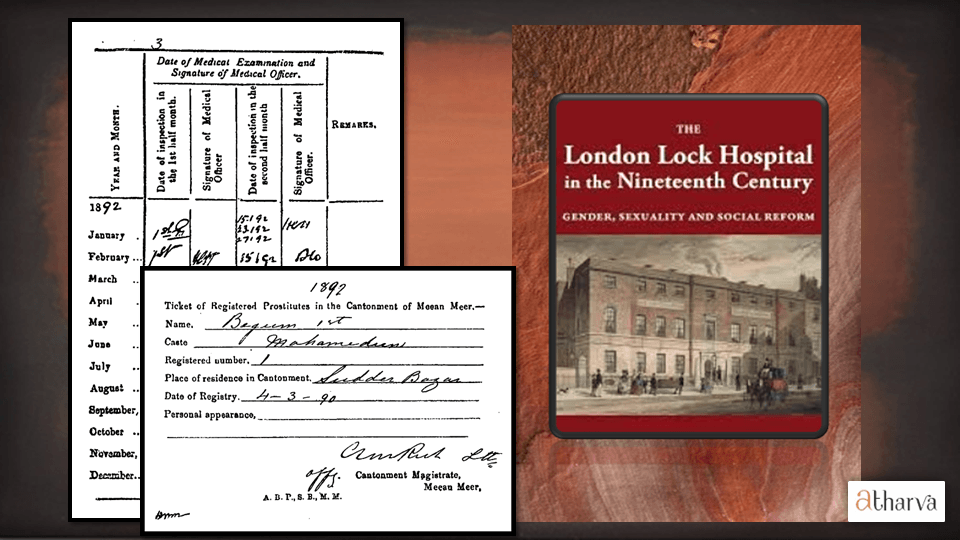
What happened when a woman was suspected of an STD? She would have to undergo a physical examination at the “Lock Hospital” and would be detained until she showed an improvement in her condition. In fact, these physical examinations were made periodic and compulsory over time. The system, and by “system” I mean the various regulations initially and the Acts that came about later, determined how long the woman can be detained, how frequently she should subject herself to physical examinations, and what should be done to her in case she was deemed incurable. The women, by themselves, would hardly ever consent to a physical examination, by a male physician no less, but they also hardly had any choice. Bushnell wrote that “the compulsory examination is in itself a surgical rape”.
As early as the end of the 18th century, the Governor General had authorized the building of “hospitals for the reception of diseased women” at Behrampur, Kanpur, Dinapur, and Fatehgarh, to contain the spread of STDs in British soldiers. The women were not allowed to leave until they were certified as cured. A kotwal, an Indian official in charge, had to ensure that women found “disordered” on “the customary days of inspection” were to be sent at once to the hospital. In other words, even by the late 18th century Lock Hospitals and compulsory examination of Indian women were the norm, if not actual regulations.
In 1805, an Assistant Surgeon attached to one of the regiments had written to the Madras Government about the “vast proportion of venereal cases”. The Governor, at that time, was William Bentinck, who forwarded the request to the Medical Board. The Board proposed the establishment of Lock Hospitals and the appointment of special police in cooperation with the Civil Magistrate. The special police were “to control the prostitutes and the holding of compulsory medical examinations”. Bentinck did not like the idea of getting Civil Magistrates involved because “they might object to interfering with individual liberty”. He suggested that it is better to leave it to the Commanding Officers and Medical Officers to decide which women should be subjected to physical examinations. Inside the Cantonment were its own military regulations and there was no one to raise questions about “interfering with individual liberty”. With that, he sanctioned the request.
In 1809, the Madras Government asked the Medical Board how the Lock Hospitals were working. The Board sheepishly confessed that the number of British soldiers admitted for STDs had “more than doubled” since Lock Hospitals were introduced. Of course, the Board provided explanations: there were new regiments “with many younger men”, “young recruits [were] ill-calculated to guard against temptations”, the system had not been fully introduced, there were no “effective police” to ensure that women suspected of being infected were taken to the hospital, and, “all castes being huddled together miserably in a choultry,” with the more prosperous prostitutes preferring native medical assistance.
In view of the economy, the Board suggested that 9 of the 17 Lock Hospitals be shut down, and “a decent woman of caste and proper years” be made in charge of the remaining ones. The reason was to attract “more prosperous patients…who would be of higher caste”. The Government closed some Lock Hospitals promptly, which did not go well with the military authorities who reported that the infection rate in soldiers had gone further up. The Government then agreed to reopen the Lock Hospitals but asked the Medical Board how the system could be improved. The Board repeated their earlier demand of special police and then added that “appropriate buildings” be constructed far from the barracks to prevent frequent intercourse. The Government approved the sanction for special police but not the rest, and the Lock Hospital system continued to operate in Madras Presidency until 1835.
The “special police” was an interesting development. In 1825, the Superintending Surgeon of Poona Division suggested that two peons be appointed to bring “diseased women to the Lock Hospital”. He proposed a wage of 5 rupees a month and a bonus of a quarter of a rupee for each woman brought in. The Medical Board could find the obvious issue here, which was the abuse of the bonus for each woman brought in. The Commander-in-Chief, however, suggested that “two steady old police peons”, or constables, would be effective because they knew the regulations and the “haunts of the prostitutes”. The request was approved, and in the subsequent years, the number of such peons was increased with the objective of arresting “all strange women found in the lines of the European regiments of Poona and to take them to regimental hospitals to be examined.” The system of appointing “special police” spread elsewhere, and it became a norm which was incorporated into the Acts later.
When Bentinck later became the Governor General of Bengal, he suggested that Lock Hospitals be closed because they were deemed ineffective, and further, this saved the government “thirty thousand rupees a year”. The opening and closing of Lock Hospitals played out like this across the Presidencies and the Cantonments. The statistics would show that the Lock Hospitals were ineffective in bringing down the spread of STDs in British soldiers, then the Lock Hospitals would be closed down, then the military authorities would deplore at the increasing rate of infections, and the Lock Hospitals would be reopened but with new regulations that eventually became more and more arbitrary, and not to mention, degrading to the Indian women who were the only ones affected by the forced examinations. As the regulations became Acts, there was a greater emphasis on the well-being of the Indian women such as cleaner premises, better treatment, and even special quarters, but this was only to further the core objective that I mentioned: contain the spread of STDs in British soldiers.
Consider the military order that was sent to all the Cantonments of India in 1886 by the Quartermaster-General Chapman, in the name of the Commander-in-Chief of the Army in India, Lord Roberts. The order, as Bushnell noted, was named as the “infamous circular memorandum”, “circular” here meaning a “document for distribution”. I will allude to this “infamous circular” several times as it plays a key role throughout, and so, remember the two players: Chapman and Roberts.
The memorandum declared that “In the regimental bazaars it is necessary to have a sufficient number of women, to take care that they are sufficiently attractive, to provide them with proper houses, and, above all, to insist upon means of ablution being always available.”
We may think that this was about the comfort and health of the women, but the next paragraph makes it clear who it was meant for. “If young soldiers are carefully advised [about] the advantage of ablution and recognise that convenient arrangements exist in the regimental bazaar, they may be expected to avoid the risks involved…with women who are not recognised by the regimental authorities.” In simple words, if the British soldiers were told that the women inside the chakla-s have washed their bodies well, then they might avoid going outside the cantonment to sow their British oats and get infected in the process. Bushnell wrote, tongue firmly in cheek, that “young soldiers are not expected to be moral, but only to be instructed as to the safest way of practising immorality.” In fact, the British soldiers were told that it was a “point of honour” to point out to their officers the women who were likely infected.
Bushnell succinctly captured how any law for compulsory examination of women necessitated the regulations that followed. If a law demanded that women suspected of an infection be examined regularly, the police would find it necessary to maintain a list of such women. Hence, registration becomes compulsory. After the examination, those women who were found diseased would require treatment. Hence, a hospital must be established. Since not all women would voluntarily go for regular examinations, and some of them may escape the hospital, a provision must be made to enforce their detainment. Hence, the hospital becomes a Lock Hospital, and fines and imprisonments become necessary. With many women in prostitution, it becomes difficult to follow them up, prove their identity, and force them to regular examinations. Hence, segregation gets introduced, and the compulsion cannot be secured without the police and the magistrate. In short, any version of any act related to reducing the spread of STDs in British soldiers will have the same essential features: compulsory examination, registration, Lock Hospitals, fines and imprisonments, police surveillance, and segregation, the last one referring to the women being forced to take up compulsory residence inside the Cantonment.
CONTAGIOUS DISEASES ACTS
The spread of STDs in British soldiers and sailors was not just a vexing problem for the British Empire in India and other colonies, but it was also hitting them hard in their own homes. The need to address this was felt deeply by the British Government, and this resulted in a set of 3 acts called the Contagious Diseases Acts, the first of which was passed in 1864 with subsequent amendments in 1866 and 1869.
The preamble of the Contagious Diseases Act was clear about the purpose: “That the peculiar conditions of the naval and military services, and the temptations to which the men are exposed, justifies special precautions for the protection of their health, and their maintenance in a state of physical efficiency.” We may as well strip this down to the essentials: British soldiers and sailors cannot keep themselves away from women, and so regulations are needed to keep them away from STDs.
Now, these Acts were intended for British soldiers and sailors in certain “military stations, garrison towns, and naval seaports” in England and Ireland. The 1864 Act covered 11 such locations and the later acts expanded this scope. The Acts empowered the police to detain women suspected to be prostitutes and have them subjected to a physical examination for STDs. If the women were found to be infected, they were detained in a “Lock Hospital” for a limited time, which was 3 months in the first Act of 1864 and became 9 months later in 1869.
“The principal difficulty in implementing the Act,” wrote Petrie in his book about the campaigns of Josephine Butler, was “determining who was a prostitute and who was not.” The definition, ultimately, was left to the policemen who would summon any woman who they suspected as a prostitute. By the time the second Act was passed in 1866, the police had arbitrary powers and as for the women they arrested, “presumption of guilt” was always assumed.
Once again, these Acts were applicable in parts of Britain but the overall system involving policemen in plainclothes, physical examination of suspected women, and the operation of Lock Hospitals, as I have covered, had already existed long before in parts of India. There were local but similar regulations in the Presidencies of Bombay, Madras, and Calcutta, and the Cantonments had their own “military regulations” which covered the system of prostitution. At the time Queen’s Daughters was written, which was the 1890s, there were about 100 Cantonments in India, some small with a few soldiers and traders, and some large enough to be considered as individual towns. Within the Cantonments, a “more arbitrary law” prevailed which enabled the British inhabitants inside to feel safe in case of trouble from outside – uprisings, rebellions, and riots. A Cantonment was basically a military establishment maintained with a military law, and this, as we will see, enabled the system of licensed prostitution and compulsory physical examinations to continue despite heavy opposition.
The Cantonment Act of 1864, or the Act XXII (Twenty-Two) of 1864, called “for regularizing the administration of civil and criminal justice in military cantonments,” with a clause “for inspecting and controlling houses of ill-fame and for preventing the spread of venereal disease.” A committee that was formed to draw up the rules proposed that prostitutes be divided into two classes: “public prostitutes frequented by Europeans”, and “public prostitutes not so frequented”. Any prostitute frequented by the Europeans would be subjected to regulations: she must register with the cantonment authorities, undergo physical examination every month, and she would be detained in a Lock Hospital if found diseased until she was certified as cured. The committee realized that “if prostitutes felt harassed, they would not register with the authorities, and control would be lost.” So, they suggested that matrons – mahaldarni-s – be appointed to supervise these women and ensure that they underwent the physical examinations regularly. The committee even recommended that the Medical Officer take special care that “the comforts and interests of patients [were] carefully looked after, their residence in hospital rendered as little distasteful to them as possible, and that all duties connected with women performed by himself or his subordinates [were] carried out with respect and feeling towards [the] sex.”
The ostensible concern was more to do with providing a conducive environment for more women to register themselves with the Cantonment authorities. In that way, the authorities could control them better, and hope that the spread of STDs could be checked. The idea, as I said earlier, was to encourage the British soldiers to confine themselves within the Cantonment. The prurient British soldiers, however, frequently ventured outside the Cantonment. The Cantonment Act, therefore, allowed the regulations to be extended beyond Cantonment boundaries. In Kanpur Cantonment, for example, the rules were introduced in 1867, but in a few years, the rules were extended to the whole of Kanpur. The British soldier, I gather, was second to none at least in his pursuit of prostitutes.
The Madras Act of 1866 had a similar clause “for the control of houses of ill-fame for preventing the spread of contagious diseases”. An idea of what the Act encompassed could be obtained from the speech of Walter McLaren, a British Liberal Party MP, in the House of Commons much later in 1888, and recorded by Benjamin Scott in his book, “A State Iniquity: Its Rise, Extension, and Overthrow.”
The Act stated that “No woman known to be a public prostitute shall reside or practise her trade within the limits of the Cantonment, unless she shall first have her name registered.” If a woman who was not registered was caught, she would be registered and subjected to the same rules as for registered prostitutes which prescribed compulsory and periodic physical examinations. The abuse of this regulation by unscrupulous policemen was sadly a recurring story. The Act did not stop there but insisted that each registered prostitute pay a monthly fee to the Lock Hospital, not exceeding 1 rupee, failing which any of her property within the Cantonment may be sold to recover the dues.
The Act also covered the rules for setting up a brothel after due inspection and approval by the authorities. The brothel owner would also be registered and given a copy of the permission to “keep a brothel” for a specified number of prostitutes. The brothel owner would have to furnish the name and details of all women employees less than 40 years of age – they would all be subjected to the same periodic physical examination as “public prostitutes”. The brothel owner, obviously, cannot hire any woman less than 40 years of age, either as a prostitute or as a servant, unless she was registered. I guess there was no saying who the British soldier would strike next. If the brothel owner was herself a woman less than 40, she would be subjected to the same rules of physical examination.
McLaren stated in the House of Commons that “nothing more horrible, nothing more harmful, nothing more utterly discreditable, has ever been enacted in a civilized country.”
The Cantonment Acts were obviously confined to Cantonments, which were military establishments. In the capital cities of the Presidencies – Bombay (Mumbai), Madras (Chennai), and Calcutta – the scale of the spread of STDs was much higher. Calcutta (Kolkata), at that time, had more than 30,000 prostitutes – compare this with 300 in the Kanpur Cantonment. In 1864, Calcutta’s Health Officer, Charles Fabre-Tonnere, said that “Nowhere are the lower classes of Christians and Natives more debased, dissolute, and unclean than in the metropolis of India. Everything about them bears the stamp of a total absence of every moral, religious, and social feeling.” In 1867, he recommended that an act along the lines of the Contagious Diseases Act of 1864 be applied to Bengal’s ports as well. The one difference, he suggested, was that the registration of prostitutes be made compulsory, a rule that was already a part of the Cantonments Act. Eventually, this became the “Indian Contagious Diseases Act” of 1868, an extension of the Contagious Diseases Act of 1864 but with more stringent regulations, some of which were carried over from the Cantonment Act.
The Act prohibited a woman from carrying on the “business of a common prostitute” or a person from carrying on the “business of a brothel-keeper” without being registered under the Act. The Act allowed the Health Officer to serve a notice to a “common prostitute” – who would be a registered woman – to “come up before the officials and enter herself for a voluntary examination.” If she did not comply with this voluntary examination, she would be served a notice which went like this:
“Having received information that you are carrying on the business of a common prostitute, I hereby request you to attend at my office at [so-and-so time] for the purpose of registration; I hereby give you notice that, in the event of your not complying with this request, you will render yourself liable to be prosecuted; that it will be my duty to prosecute; that I shall prosecute before a magistrate of the town of Madras under ‘The Indian Contagious Diseases Act, 1868’ and the rules framed by the Government of Fort St. George in conformity therewith; and that on your conviction of carrying on the business of a common prostitute without being registered, you will be liable to be imprisoned for a term not exceeding one month, or to be fined in an amount not exceeding 100 rupees, or both.”
The “voluntary” examination was just a sham. If a woman agreed to the voluntary examination, she would have to go to the registered office which, as McLaren noted, was “in a public part of the town”, and in many cases, “in the most unsuitable situations”. One was near a young men’s college, and another was near a church. It was ironical that the military authorities talked about the “gospel duty of healing diseases” as reasons for hospitals but not the seventh Commandment which prohibited adultery. Anyway, after the examination she would receive a certificate which stated that she was registered as a common prostitute with details about her height, general appearance, complexion, hair colour, eye colour, and her residence.
Whichever way we look at any of these Acts enacted in the Indian subcontinent, Cantonment Acts or Contagious Diseases Acts, the bottom line was that prostitution was “legitimized” and “regularized” as a business. The system of “licensed prostitution” accorded more control over Indian women in the hope that this would reduce STDs in British soldiers. If the regulations did not yield the intended result, the reason given was poor control by the authorities or the soldiers, or some variation of this, and the result was a set of more stringent regulations with more control over the Indian women.
Whether the presidencies of Bombay, Madras, and Bengal, or other areas of British India, the Cantonment Acts and the Contagious Diseases Acts were implemented on the whims of the corresponding authorities with hardly a thought for the Indian women. In Bombay, for example, after the Bishop of Bombay and others petitioned in 1879 against the Act stating that “it is immoral”, the authorities stated that “they would adopt measures to prevent annoyances to respectable persons”. The authorities instructed the Commissioner of Police “to be careful not to interfere with or attempt to register women in positions of mistresses of wealthy persons or kept women” – not my words. I am just quoting verbatim. The “infamous circular” of 1886 recommended that women who were incurably diseased must be removed from the cantonment limits and “should be dealt with as a police question in communication with the civil authorities”. In other words: these women must be thrown out, and if they protested, let them be dealt with by the police. It is hard to even comprehend what would be the fate of such a woman in the hands of policemen who may have unscrupulously brought her earlier in for registration as a “common prostitute”.
THE PROCUREMENT OF INDIAN WOMEN
In any Cantonment, the Commanding Officer would request for the procurement of Indian women for prostitution. As a response to the “infamous circular” of 1886 a Commanding Officer wrote, “Please send young and attractive women,” because he had 400 men in the regiment and only 6 women. He needed 6 more women, young and attractive. Just to drive home his point, he added that “some of the current women [were] not very attractive”.
Another Commanding Officer wrote, “There are not enough women; they are not attractive enough. More and younger women are required,” and yet another wrote, “I have ordered the number of prostitutes to be increased to twelve and have given special instructions as to the four additional women being young and of attractive appearance.”
With the desperation that one can see in these requests, and the fact that “licensed prostitution” was run as a business in Cantonments, one would think that the British officers acted more like Cantonment pimps. With such men at the helm once, one wonders at the present situation in Great Britain.
A mahaldarni, named Rahiman, told Bushnell, “If a girl is not sufficiently attractive to earn a living, I send her away and get another in her place. I get the women from the bazaar when more are needed. I go to the Cantonment Magistrate, and he gives me five, ten, twenty, or fifty rupees, as the case may demand. To buy a very young, attractive girl I will be furnished with fifty rupees. There is always plenty of money to get them with.” One could hazard a guess how the “rates” were decided for the girls, and who got sold for five, ten, twenty, and fifty rupees, like vegetables in a market. The Report of the Special Commission in 1883 noted that about half the girls in prostitution were aged between 14 and 16, and Bushnell noted a Major General informing her of the probability that “prostitution is practised at even younger ages than this.”
Of course, the mahaldarni could not act alone to procure these “young and attractive” girls. She got all the help she needed from the British officials, including the police, made of Indian men, and she had a quota to ensure.
The Commanding Officer would give an order to his Quartermaster, an officer who oversaw the administration of the regiment. The Quartermaster would, in turn, ask the kotwal to have policemen bring in more girls. The policemen, in plainclothes, would visit the neighbouring villages and snatch away the daughters of the poor – they had to be good-looking, the policemen were told, and aged 14 or above. Once inside the Cantonment premises, the bunch of girls would be lined up in front of the Colonel and the Quartermaster who would select from them, get them examined at the hospital, provide them with a pass, and hand them over to the mahaldarni.
A retired soldier told Bushnell that “if a native policeman saw a young girl talking indiscreetly, though innocently, with a man, he would denounce her as a suspected prostitute; she would be brought before the Cantonment Magistrate and be registered to live among the soldiers.” The police, therefore, extorted money by threatening to hand over the girls to the Cantonment. Bushnell noted that “By such a system of delivering over the bodies of women as public property, any woman of humble circumstances upon whom any man of lecherous design casts his eyes, could be made to come to his terms of existence by the aid of the police force, if necessary, and Magistrates of evil design could condemn any woman to a life of prostitution.”
One can only imagine the dire steps that the parents of girls, their brothers and cousins, and the girls themselves, would have resorted to if they were living anywhere close to the Cantonments. In a letter to the Cantonment Magistrate, a mahaldarni had written that she had brought four new girls, but they were accompanied by their protesting brothers. She asked the Magistrate to confine the girls to the chakla so that the brothers can be kept away. The chakla, being inside the Cantonment, was out of bounds for anyone without a proper pass.
Sometimes, the whims of fate left the girls with no choice but to sell themselves at the mercy of the British soldiers. Bushnell and Andrew met the young girls who were only too willing to tell their stories amidst tearful eyes: one was deceived by an old woman with the promise of employment, one was left to starve until she came to the British soldiers who saved her but for their own lust, one faced abuse from her husband and ran away only to be caught by the police and sent to the Lock Hospital, one was taken in by a daughter of an Indian soldier who sold her at the age of 11, one was sold by her husband to the mahaldarni for money.
The mahaldarni-s ran the chakla with an iron hand for they were under the direct line of fire from the British officials. In a letter to a mahaldarni, a staff-surgeon, of all people, wrote, “You have not brought your women from Meerut and Ferozepore. You will have to do it, or the Colonel will think you have broken faith, as it is now fifteen days since you received your appointment.”
On the other hand, a mahaldarni showed Bushnell and Andrew a letter of recommendation from the Quartermaster: “Ameer has supplied the 2nd Derby Regiment with prostitutes for the past three years, and I recommend her to any other regiment requiring her for a similar capacity.” Another had equally proudly shown a letter from the surgeon of the regiment: “The soldiers were remarkably healthy while the prostitutes were under her charge.”
THE LIFE OF WOMEN IN CANTONMENT
Bushnell and Andrew visited ten Cantonments in India in early 1892. By then Indian women were subjected to these practices for close to a century, if not more. The visit was an outcome of a letter that Bushnell had sent to Josephine Butler seeking her advice for “something for her to do”. Butler had become aware of the situation in India through a friend of hers, Alfred Dyer in Bombay, but she was hardly able to travel herself. She was 62, and her husband was sick and had to be taken care of. Butler thought that the letter from Bushnell had come at the right time, and she urged Bushnell to travel to military districts in India and “make careful inquiry into the conditions of the things there, with a view of ridding that people of the oppressive tyranny and shame imposed on them by the Army authorities.”
Bushnell, in turn, showed the letter to a fellow member of the World’s Women’s Christian Temperance Union, Elizabeth Andrew, who readily agreed. The result was their journey to India in 1892 and the subsequent publication of “Queen’s Daughters” in 1899. During their roughly three-month stay in India Bushnell and Andrew met several Indian women and their mahaldarni-s in Cantonments. The book is one of the few records that speaks about the life of Indian women in prostitution – the other sources generally cover the tedious debates and discussions around the Acts.
The life of women in a Cantonment was never easy. One of the girls remarked to Bushnell, amidst tears, “In all the years of my life I have not known one day of happiness – my heart is full of wounds.” Some resigned themselves to their fate which, they said, had written the word “prostitute” on their foreheads. The women talked about the treachery of the mahaldarni, the cruelty and abuse heaped upon them by drunken soldiers, the indecent exposure to doctors and the degrading physical examinations. In one of the regiments in the northern frontiers the authors found only five girls while the others had somehow escaped. The girls shared their woes saying that “the men of the regiment when drunk beat them and robbed them, not only refusing to pay them any money, but even taking away their cotton quilts and selling them to their own native servants for a few paise with which to buy a drink.” The girls described the case of a woman who was beaten terribly by a soldier, and cut in the arms and breast, after which several girls had escaped.
The Cantonment authorities, noted Bushnell, asserted that the system “was merciful, even to the girls” because their diseases “were never allowed to go beyond the initial stage”. However, this was not strictly true because the Lock Hospitals hardly ever recorded cases of secondary infection. When the infections became serious and the girls became unfit for prostitution, they were thrown out of the cantonment. An infection was not the only reason for being thrown out, “too old to be any longer sufficiently attractive” to the British soldier was also one. A woman succinctly summed up what lay in store for her: “If we are expelled, where shall we go? We must leave all our friends, and no one will give us work. It means great hardship; we would starve.”
Based on conversations with many women, Bushnell noted that “the fire of their hatred and indignation all centred upon the heart of the regulations, the examinations, and the violation of womanhood which these examinations were felt to be.” In a report that was published later, one of the officers said that “they sob and cry and petition for deliverance, and protest their outraged feelings against the examinations, but that merely proves what hypocrites they are, and how cleverly they can play a part,” while another said that “they are as artful as a waggon load of monkeys.”
The British, especially the military authorities who supported licensed prostitution, claimed that the “recruits” came from the “prostitute caste”. Essentially, they implied that prostitution was a hereditary business in India, and since these women were from the “prostitute caste”, they were anyway “blind to moral sense”, had “no desire to give it up”, and therefore there was no harm done by the British themselves for making them continue their profession. Any feeling of shame or outrage that these women showed, asserted the military authorities, was therefore just a sham.
Bushnell, curious to know about this “prostitute caste” asked both British and Indian people, and practically everyone denied it. She noted that in the cantonment she found “Hindus of all castes, from high-caste Brahmins down, and also Mohammedans, Arabs, Egyptians, Afghans, Kashmiris, Jewesses.” The argument that prostitution was a hereditary business in India was, in all probability, contrived by the British from the tradition of devadasis, but even Bushnell saw through this speciousness by observing that they were “a wholly distinct class from the enslaved women who are set apart to minister to the vices of the British soldiers.” The authors even recorded that all the women they met “expressed great shame and humiliation” and “never tried to justify their sinful acts”.
One of the women told Bushnell and Andrew, “the Queen does not approve of this; it is the Commander-in-Chief and the officers who are doing these things!” Interestingly, this was true because this conversation happened in 1892, and the British Government had abolished the Contagious Diseases Acts in 1886, six years earlier. In India, however, the practice continued under the more arbitrary Cantonment Act. The Commander-in-Chief at that time was Roberts, who was behind the “infamous circular” of 1886, the one which called for a “sufficient number” of “sufficiently attractive” women. The other women joined the chorus. “We all hate it,” they said, referring to the physical examinations. “It is very disgusting.”
When Bushnell told them that they were grieved that those who called themselves Christians did such things, one of them bitterly replied, “Yes, the Commander-in-Chief, the Colonel, all of them all the way down – your Christian men – they favour such things!” The girl, however, had no ill feelings towards the Queen. She said, “the Queen does not [endorse] it, for she has daughters of her own, and she cares for her daughters in India also.”
The title of the book, “Queen’s Daughters”, came from this conversation that Bushnell and Andrew had with these Indian girls in Meerut.
The women dreaded the physical examinations, but any attempt to avoid them, or escape from the Lock Hospital only resulted in a heavy fine, if not a worse punishment. Bushnell noted that almost every Cantonment girl they questioned was so beset with debt and fines that she could not think of escaping without being arrested on account of them. When confronted with this question of girls in debt, Colonel Crawley who commanded the Allahabad district had this to say:
“It stands to reason that the women could not be in debt, for if a woman only received six men daily for twenty-three days in a month, at the rate of only four annas per visit, that would represent thirty-four rupees eight annas, and even allowing one-fourth of this to go to the mahaldarni, rent two rupees, and food at the rate of four annas daily for thirty days, a woman would have fully seventeen rupees a month clear.”
How does one even respond to this?
Since there was no means of an escape, there were children too. Bushnell saw “a little girl of ten, gaudily arrayed in the style of the others, thus publishing her candidature for a life of vice before she knew its meaning in the least.” Another one, a little boy of two, wrote Bushnell, “with a beautiful forehead, and other features that betrayed his English blood, had been forsaken by his father.” The girls said that his father had “gone home to England.” Such “Anglo-Indian” or “Eurasian” children were in all Cantonments, left by their British fathers in India. They could not take them back home to Britain because they had to get married to a “proper” British woman and have “proper” British children. One of the arguments by the British Government for the Contagious Diseases Acts was “protecting the ‘innocent wives and children’ of British soldiers. In other words, an infected British soldier from India may end up infecting his future wife and children. Bushnell remarked caustically, “which wives and which children – those that already exist in India, or those that have not yet materialized in England?”
In his speech at the House of Commons in 1888, the Liberal MP, Walter McLaren asked, “For whose benefits are these regulations kept up? [For] the benefit of the women in India? It is urged falsely that it is kept up for the benefit of the English women whom they may afterward marry. If that is the case, why are we to sacrifice poor Indian women to them?”
THE REPEAL: UNITED KINGDOM
What was the outcome of these Cantonment Acts and the Contagious Diseases Acts, all of which were officially active since 1864 but had prevailed as various regulations since earlier? The expected outcome from the Acts was controlling the spread of STDs in British soldiers, but did that happen?
In a government report on sanitary measures in India, the number of British soldiers admitted with STD was shown to consistently increase from 167 per thousand in 1873 to more than 340 per thousand in 1885. The increase was observed across the Presidencies of Bombay, Madras, and Bengal. The Sanitary Commission, which published the report, noted that “the whole subject appears to be surrounded with insurmountable difficulties, for in every government the disease has advanced in the face of every means of prevention which has been adopted.” In Madras, where the situation was the worst, almost one in two soldiers was infected in 1884 despite “an efficient police and Lock Hospital system.” The Surgeon-General observed with some amusement that “Lock Hospitals have…been kept up for the propagation of venereal disease among British soldiers, though originally established with a different intention.”
For those who were fighting to abolish the system, the Abolitionists, the reason for this increase of infections despite stringent measures was simple: “encouragement of immorality” which led to an “increase of vice”. Earlier, a British soldier might think twice for the fear of getting infected, but now, the Acts comforted him into a sense of security. He was told, no less by the authorities, that the prostitutes were registered, licensed, and examined periodically. All he needed to do was pay a piddly amount. The legalization and regularization of prostitution simply meant that more British soldiers indulged in it.
The Cantonment authorities, meanwhile, were reluctant to let go of the regulations even in the face of damning statistics, and they devised their own ways to continue them because, after all, the prurience of British soldiers was paramount. When Lock Hospitals were closed in Bareilly, there was a proposal to “induce a greater number of prostitutes to reside in cantonments by making their residence there more attractive”. The same old story. The Cantonment was even willing to shell out funds both for the women and their visitors. A recommendation from another Cantonment was to replace the mahaldarni because the current one “does not take trouble to attract good-looking women”.
Back in England there were these two fierce camps: the Regulationists and the Abolitionists. The Regulationists believed in regulating prostitution, which was the status quo then. Their stance was that the government is recruiting young and unmarried men, and so, the government has a duty to protect them from “the consequences of unavoidable evil.” In simple words, young and unmarried men need women, and if this leads to infection, then let the government take steps to protect them. The Abolitionists believed that prostitution was not necessary, and virtue must be demanded. Their stance was that there was no hope of combating STDs until the cause, which is sex, was removed. The stance was succinctly stated by Dr. Elizabeth Blackwell, the first woman to earn a medical degree in the US and a vocal opponent of the Acts, who said, “We may as well expect to cure typhoid…whilst allowing sewer gas to permeate the house.”
One of the suggestions, which was regularly offered, to break the vicious cycle of the spread was to allow more soldiers to marry. The Royal Commission on the Sanitary State of the Army, in 1863, blocked this suggestion by claiming that “when a regiment went on active service wives and children left behind might be exposed to temptation and distress.” Instead, the Commission suggested improved facilities for “occupation, instruction, and recreation” of the soldiers. When the Cantonments Bill was introduced in 1864, A. A. Roberts, Judicial Commissioner of Punjab, opposed the clause which allowed local governments to regulate brothels. From a moral perspective, he urged that more soldiers be allowed to marry. C. E. Trevelyan disagreed and said that “moral standards differed in different countries, and in India the prostitute [is] a respectable, professional person.” The clamour for allowing more British soldiers to marry only increased in later years but was never considered seriously by the authorities.
Another suggestion, as Bushnell noted, was to extend the compulsory physical examination to men. She vehemently opposed it, and as one of the earliest proponents of Christian feminism, said that “men will never legislate themselves into the degradations and inconveniences of the compulsory periodical examination.” She was right. Lord Landsowne, the Secretary of War, said in the House of Lords that regular examination of men was considered, by the men, “as a brutalizing and degrading practice.” I assume that Lansdowne kept a straight face when he said that.
Yet another suggestion was to employ female medical assistants which may remove the reluctance of Indian women to take physical examinations. Bushnell observed that respectable women physicians wished to treat disease, not prostitution. She sarcastically remarked how many such women physicians would want to return to their own country with a certificate which would say, like it did to a mahaldarni, that the “soldiers were remarkably healthy when the prostitutes were under her charge.”
Josephine Butler, who I had mentioned earlier as the inspiration behind Queen’s Daughters, was the leading voice of Abolitionists in England. In 1869, just after the third edition of the Contagious Diseases Act was passed, the “Ladies National Association for the Repeal of the Contagious Diseases Act”, shortened to LNA, was formed by Elizabeth Wolstenholme with Butler as its president. While the LNA worked fervently to push for a repeal of the Acts, and there was some support from the Liberal politicians, the pressure was not sufficient.
In 1874, Butler toured parts of Europe to understand what similar organizations were doing and the challenges that they faced. A year later, she founded what later became the “International Abolitionist Federation” aimed at abolishing the state regulation of prostitution. The organization attracted Liberal MPs who supported the repeal of the Acts, and the movement gained steam. The details of the campaign by Butler and others are interesting, involving local politics, threats by brothel owners, royal commissions, parliamentary debates, and change of governments, but these are outside the scope of this talk. In 1886, the Acts were formally repealed by the Parliament of the United Kingdom, 24 years after they were first passed.
THE REPEAL OF ACTS: INDIA
In India, the opposition to the Cantonment Act and the Indian Contagious Diseases Act was not entirely absent but was largely ineffective. The Act was suspended in Bombay in 1872 but not because of its ineffectiveness or any moral qualms. The reason was more financial in nature, a tussle between the Government of India and the local Government in Bombay. The Act was reinstated in 1881 due to pressure from the Naval Commander-in-Chief, but the financial tussle continued. In 1881, Lord Ripon, the Governor General, formed a committee to assess the effectiveness of the Act in Calcutta. The Surgeon General said that “the results of the Act were altogether insufficient to justify the expenditure”. He felt that the money should be spent on curing other, more worrying diseases in India, such as dysentery and cholera. The Act was suspended in Calcutta despite some opposition. In Madras, a similar committee was formed which recommended that the Act be extended “not upwards, among classes whose privacy may be unduly invaded, but downwards, in order to reach the unfortunate casuals infesting the neighbourhood of the barracks and plying the trade in an open and most shameless manner.” In other words, the Act must be applied to those women who were originally exempt from the Act because they were not registered. Kenneth Ballhatchet who recorded the detailed history of these events in his book, “Race, Sex and Class under the Raj,” sarcastically commented: “Here was the familiar picture of the soldier threatened by unauthorized women haunting the barracks and infesting the neighbourhood after dark.”
While the Indian Contagious Diseases Acts were cyclically reinstated and suspended in the Presidency capitals, the Cantonment Acts proved to be more entrenched. They not only survived opposition but also became more stringent and more elaborate. In 1883, for example, a circular was issued by the Quartermaster-General that reliable matrons should be appointed to ensure that “the women under their charge consort with none but Europeans”. The next year, the Quartermaster-General suggested that the quarters for these women be “quite inexpensive places of mud-built walls and tiled roofs, of village character,” with the idea that with such “segregated” quarters the women can be easily found for examination. The circular even said that “it was customary for certain women to attach themselves to a regiment, moving with it as it marches.” In 1886, the same year when the Contagious Diseases Acts was repealed in Britain, the “infamous circular” that I had earlier referred to was issued by Quartermaster-General Chapman.
In 1888, Alfred Dyer, who ran a weekly magazine called Sentinel, laid his hands on a copy of the circular and published it in an article titled “The Infidel Government of India”, the “infidel” here referring to the Government in India being “faithless” to the Crown, Her Majesty’s Government. The uproar caused by this led eventually to a resolution in the House of Commons that “Any mere suspension of measures for the compulsory examination of women, and for licensing and regulating prostitution in India, is insufficient; and the legislation which enjoins, authorizes, or permits such measures ought to be repealed.” The resolution was supported by Walter McLaren, a Liberal MP in his speech in the House of Commons in 1888, who said, “Our demand…is for the total and immediate repeal of the Contagious Diseases Act and those portions of the Cantonment Acts bearing on this subject.”
McLaren said that this was the first debate “on the subject of painful Acts relating to India” and went on to describe in detail the prevailing conditions. Some of the information about the regulations in the Acts that I have described come from his speech as recorded by Benjamin Scott in his book. On a related note, McLaren gave this speech in 1888, and according to him, this was the first time a debate was held in the British Parliament for atrocities that were perpetrated against Indian women since at least the early 1800s. McLaren clubbing the Contagious Diseases Acts with the Cantonment Acts in his speech laid the emphasis, like Bushnell did in Queen’s Daughters later, that these laws were the same in principle when it came to “the compulsory examination of women”.
McLaren also referenced the “infamous circular” of Chapman which, by that time, had been cancelled. A year after the circular was issued, Chapman was asked to send a report about “all orders and regulations” which were “distinct from the Indian Contagious Diseases Act”. In other words, a report on everything Chapman, in his capacity as the Quartermaster-General, was doing outside the purview of the British Government in India. Chapman, in his reply to Lord Cross, the Secretary General of India, wrote that for many years “unceasing efforts have been made to control prostitution and to mitigate…its attendant evils; but neither the Government nor its officers, either directly or indirectly, encourage prostitution.” McLaren noted with amusement that this was “written by a man who a year previously had said, ‘we must have more attractive women provided, and a sufficient number of them’.”
The Government had no option but to pass the resolution repealing the Indian Contagious Diseases Act and portions of the Cantonment Act that dealt with the system of prostitution. A new Cantonments Bill was to be drafted with no mention of prostitutes, venereal disease, or Lock Hospitals. The new Bill proposed hospitals for treatment of contagious diseases for any person, male or female. If a person had a disease, she must go to the hospital. If she did, she cannot be compelled to undergo a physical examination, but she cannot leave until she was certified as cured. If she did not go to the hospital, she would be expelled from the Cantonment. The Bill became the Cantonments Act of 1889.
Like clockwork, the Commander-in-Chief complained that STDs in British soldiers had increased ever since Lock Hospitals were closed. The Surgeon General corroborated this by stating that the number of infected soldiers had increased from 291 per 1000 in 1884 to 491 per thousand in 1889, which is almost half of all soldiers. The Abolitionists, on the other hand, denounced the new Act as hardly different from the old one. An interesting protest against the new Act came from Indian shopkeepers living inside the Cantonment who feared that people of respectable castes would be forced to huddle together in hospitals with others of inferior castes.
In 1888, a commission set up by the Free Church of Scotland discovered that “army-regulated brothels had been reopened [in] military cantonments at Peshawar and Rawalpindi”. In 1890, Lord Cross assured the British Parliament that the “Government of India had conformed to Her Majesty’s Government”, or in other words, the old Acts were gone, and the new Act was in place. Lord Roberts, who was still the Commanded-in-Chief, even wrote to Josephine Butler that the report by the Free Church of Scotland was “greatly exaggerated”. Alfred Dyer continued his tirade in his magazine, Sentinel, against what he considered as reversal to the old regulations, but he was not seeing the impact that he expected with his revelations. Butler, who had played a key role earlier, was getting too old to continue this fight herself, and as I had covered earlier, she requested Bushnell to visit India.
Bushnell and Andrew shared their findings with British Committee of the Federation for the Abolition of State Regulation of Vice, which, in crux, was that the resolution of the House of Commons of 1888 was disregarded and the regulations for licensed prostitution and compulsory examinations remained unchanged under the Cantonments Act of 1889. In 1893, they were summoned to England to give their evidence before a departmental committee on what went on in the cantonments in India. The British Government also sent a commission of their own to investigate the matter in India which, upon returning, confirmed the same: not all Cantonment authorities had complied with the orders.
One of the orders, for example, stated that registered prostitutes should no longer be allowed to live in regimental bazaars. The prostitutes were duly turned out – this was in Ambala and Meerut – and after some time, they were promptly brought back. The authorities rationalized that the order only prohibited registered prostitutes in regimental bazaars. So, they cancelled the registration. The order said nothing about unregistered prostitutes. An officer in another regiment said that the order was marked “Strictly Confidential”, and hence, was locked in a confidential box and had escaped notice. Another officer said that he had just arrived in India and was not aware of what was prohibited. The military mafia, so to speak, did everything possible to perpetuate the system of licensed prostitution, mandatory physical examinations, and Lock Hospitals.
The departmental committee also summoned Lord Roberts, because the “infamous circular” played a significant role in the evidence by Bushnell and Andrew. Roberts vehemently denied that he knew anything about the circular that was issued in his name. He stated that he “certainly would not have approved of that part…which referred to providing them with pretty young women.” Such ideas, he said, were “repugnant to the ideas of an officer and a gentleman.”
Roberts realized that he was on a flimsy ground because he was sure that Chapman, when summoned later by the committee, would give him away. Completely cornered, he sent a pre-emptive note of apology to Bushnell and Andrew stating, “I deeply regret this, and I feel that an apology is due from me to the ladies concerned. This apology I offer unreservedly.” However, he added that “a great deal of unpleasantness would have been avoided” if the ladies had approached him when they were in India. Since the ladies were hardly aware of “language, and of the habits and customs of the people of India”, he wrote, they may have not drawn the wrong conclusions.
Chapman, when later asked if Roberts knew of the memorandum, simply replied, “Most certainly. He read it over and entirely approved of them.”
The departmental committee submitted their report recommending that a legislation was necessary, once again, because the past orders had not ended the old system. The new rules proposed by the committee, however, only introduced a further dilemma. What happens if prostitutes were excluded from Cantonments, as demanded by Abolitionists and missionaries? The British Government in India was ready with an answer: “The absence of prostitutes in cantonments where large numbers of young unmarried soldiers are living would probably lead to offences such as criminal assault, rape and unnatural crime,” the last one being homosexuality.
Subsequently, a Bill was introduced in 1894 to replace the earlier Cantonment Act of 1889 which was not even followed. The Bill prohibited any form of regulated prostitution within cantonments and called for abolishing compulsory or periodic examination of women for STDs. The Commander-in-Chief, expectedly, raised the concern of increased incidence of STDs in soldiers, and opposed the provisions of the Bill. However, the public opinion was not in favour of the old system, and further, the “infamous circular” fiasco by Roberts had dented the credibility of the military. In 1895, an amendment to the Cantonments Act was passed. While “venereal diseases” was not mentioned, the medical officer could summon anyone suspected of being infected with cholera, smallpox, diphtheria, or typhoid. Bushnell noted that this was done to protect the character and reputation of women because the only method earlier of getting hold of a suspected woman was when a British soldier pointed her out. However, the soldier did not want to be questioned himself, and so, he would point out and accuse some other woman who may not even be infected.
The outcome of all this, as you may have guessed by now, was not surprising. At the end of 1896, about half the British soldiers were infected with STDs. The British authorities now turned to their European counterparts. How did the French and the Germans, who had less than one-tenth the infection rate in their soldiers, control this? The answer, they found out, was regulation of prostitution. There was now a clamour to go back to the old ways, at least in some reasonable form that would allow compulsory physical examinations and some regulation of prostitution, but certainly not the demand for more “young and attractive women”. The public opinion, which just a few years ago was in favour of abolishing the abominable regulations for prostitution now turned towards protecting the British soldiers from the abominable scourge of STDs.
The new rules were in place, again, but this time they were supported by statistics: from more than half the soldiers infected in 1896, there were less than one-third in 1899. The success was not only attributed to the new rules but to other measures such as “improved discipline and moral tone”, “games and athletics”, and the “provision for lotions and towels for the men in barracks.” Bushnell and Andrew visited India again in 1899 and they were disappointed, once again, that the old system was effectively still in place but with different rules. As Ballhatchet remarked in his book, “The military authorities had won the last battle in a long campaign.”
By the end of 1909, ten years later, the number of infected British soldiers was less than 70 per thousand. Such a drastic reduction raised suspicions on the veracity of the statistics themselves but there were also other factors, especially better diagnosis and treatment for syphilis and gonorrhoea, and the possible waning of the diseases themselves in the early 20th century. The system was so entrenched that perhaps it was waiting for technology and winds of change to be disbanded.
THE CLASS ACT
I would like to touch upon one key aspect before I wind up the talk. The thread of “caste” ran through the entire system of prostitution of Indian women, just as it did with everything else that the British did, from the indenture system to Indians in the military. I want to cover a different aspect here: class. If caste was one side of the story, the other side, the side often ignored, was class. As we know, caste becomes class when applied to social hierarchies outside India. It is a curious phenomenon that needs more discussion separately.
In his book, Ballhatchet observed that “special provision seemed necessary for the sexual satisfaction of British soldiers because they came from the lower classes and so were thought to lack the intellectual and moral resources required for continence”. The official elite, he went on to say, “were supposed to shun Indian mistresses and content themselves with British wives.” The British elite hardly shunned Indian mistresses, although in later years, the idea of having an Indian wife or an Indian mistress was shunned by many to maintain the “prestige of the ruling elite”. In fact, the British elite went to great lengths to ensure that the Indian elite, the maharajas and rajas, did not marry European women. The reason, as Ballhatchet mentioned, was “social distancing” – this is not the same “social distancing” of the Wuhan era, but the distancing that the British elite meticulously practised to keep up their racial, social, moral, and sexual superiority over the Indians that they ruled, no matter how elite the Indians were within their own society. The skein of “social distancing” was woven through the entire existence of the British Raj in India.
In 1893 when the Maharaja of Patiala intended to marry a white woman, there was ludicrous opposition from the British authorities because, 1) an Indian man was marrying a European woman, 2) she was of the ruling race and he was not, but 3) he was of the ruling class in India while she was of a lower class. The Maharaja got a letter which warned him that “marrying a European far below his rank” would render his position “with Europeans and Indians most embarrassing.” The Maharaja could not be told what to do and went ahead with the marriage.
Such “class acts”, so to speak, were very common. Lord Curzon, the Viceroy, was miffed when the Raja of Sind married the daughter of a circus acrobat “of low character and of Dutch and German origin”. The stiff upper lip would have wilted if “character” was replaced with “caste”, high or low. Generally, the British officials did not really wait until a Raja announced his marriage – they were smart enough to act much earlier. When the young Raja of Pudukottai wanted to go to England, his request was rejected because, among other things, the British feared that he would marry a European woman. When Curzon learned about Raja of Kapurthala’s visit to Europe, he said that the “third-class chief” had gone to Paris only to sleep with French women. Even the Raja dancing with the daughter of a duchess was enough to send Curzon into pangs of fury. In fact, it was so bad that Curzon issued a circular that Indian princes can “visit Europe only for special reasons, [and] their duty lay in attending the administration of their states.”
The British, to their consternation, found that some “English women of the housemaid class, and even higher” were attracted to Indian soldiers. Apparently, the “even higher” part was getting their British goats because even the “smartest peeresses” were making passes at the Indian princes. Whatever was happening to social distancing?
Back in India, the ordered environment that the British lived in was a way to separate themselves from the chaos of the “native population” and keep up their prestige as the rulers. The Cantonments, similarly, provided such a separation for the soldiers, and by confining the Indian women to inside the protected premises, the British also ensured that the depraved deeds of their soldiers did not become a point of gossip for the Indians outside. As I have said, the regulations encouraged the soldiers to do whatever they wanted inside the cantonment. While there was the medical reason for restricting the spread of STDs, there was also the imperial reason: keeping up the superiority of the “ruling race”. The soldiers, however, seemed to listen only to carnal reasons. In 1893, The Hindu in Madras mentioned the case of a “village rustic” who was killed by British soldiers because “he had defended two Hindu women whom they had been pursuing.” The Government acted against the soldiers, but only because it was reported in The Hindu. In most cases such soldiers were acquitted because witnesses feared for their lives, or worse, the military authorities would not even try to find the culprit.
The fact that far fewer Indian soldiers had STDs was not lost upon the British. Colonel Emerson, Cantonment Magistrate at Dinapur, wondered, “Can it be that the native does use water and that he washes himself clean while the European remains unwashed?” I would suggest that you listen to this statement again to get its import. After the Cantonment Act of 1895 was passed the question was again asked about the lower incidence of STDs in Indian soldiers. The reasons attributed were many: they were married, they had better information about prostitutes, they were saved by the “obligations of their caste” if they were Hindus, they were protected by their “religious injunction” to hygiene if they were Muslims, they were less prone to drink, they spent more on their family and had not much left for prostitution, and what I found the most interesting, their staple food was not “as stimulating” as that of the British soldier. The reason, perhaps, was less to do with the Indian soldiers and more to do with the profligacy of the British ones.
The British elite, then, were in a constant dilemma: how to maintain the prestige of the ruling race when their own soldiers debauched away everywhere, even in hospital rooms and dining areas. After all, the “justification of foreign rule” was that “it was bringing not only material but moral progress.” By the second half of the 19th century, observed Ballhatchet, Indians had acquired a sufficient understanding of Western ideals to start criticizing British policies. The shenanigans of British soldiers, and unruly Europeans among the lower classes, forced Indians to question whether the foreign rule, and the religion that came along with it, was really superior. The carefully constructed separation by the British elites, the ordered environment in which they lived, the cantonments in which their soldiers were trained, the games they played to prevent Indian princes from acquiring European tastes and European wives, was being violated more and more.
The Cantonment Act of 1864 provided for tighter controls over the “unruly” British soldiers but how to impose the same controls on “unruly” Europeans outside Cantonments, such as in the cities of Bombay and Calcutta? The fear, again, was that such “disreputable white men” lowered the English character. The Officiating Commissioner of Patna said that “the sight of Europeans in the lowest depths of degradation brought on by drinking and profligacy must tend to degrade our race in the eyes of all who see them, and…weaken our prestige.” In a missionary conference that was organized in Calcutta, a bishop lamented that “the most shameless characters in the city are not Indians but persons imported from Europe.”
One of the suggestions was to employ more policemen in red light districts but that was deemed feckless because, as a report said, “the ordinary police of the country, the black police, would not dare to interfere with the men.” In short, the “social distancing” that the British practised to keep the Indian policemen in their lowly place was now coming back to bite them as their own men, men of lower character or class, not lower caste, were giving reasons to ridicule the superiority of the British Rule. Some irony, that one.
In Bombay, a few missionaries started the “Bombay Midnight Mission” to patrol the red-light districts from 7 in the evening to 3 in the morning. A few residents filed a case against them in the court which promptly asked the missionaries to stop their activities. The Police Commissioner, when asked to explain why the missionary patrol was stopped, said that there were continuous conflicts between missionaries and prostitutes who considered this intrusion a loss of business. Some missionaries, who were young women, were mistaken for prostitutes by European men who they had approached to urge them not to seek out prostitutes. Some missionaries continued to patrol the streets, singing hymns in front of the houses, and got attacked. It did not change anything.
The missionaries in India were vehemently against the Acts, perhaps less from humanitarian reasons and more from religious reasons: the encouragement of vice that the Acts enabled. The governments, they felt, were actively encouraging young Christians to commit adultery, a sin. Benjamin Scott noted in his book that the International Missionary Conference which was held in London in 1888 specified three great hindrances to the spread of Christianity: “the opium traffic, the drink traffic with native races, and the governmental license of sin in India.” The memorial that was submitted on behalf of the missionaries in India noted, among other points, “The action of the Government in this respect cannot do otherwise than seriously hinder the work of Christian missions among the large masses of the people of India.”
On the other hand, some of the British officials perpetuated the myth about the “prostitute class”, as I had discussed earlier, by speciously invoking the system of devadasis. They clubbed this together with other dance forms and rechristened it as the tautological “nautch dances.” Such performances by “nautch girls”, accompanied by a troupe of singers and musicians, were common in the 19th century especially with wealthy Indians and when Europeans were guests of honour. In the later years, however, there was a movement to ban them. Sentinel, the magazine I had referenced earlier, wrote that “a nautch dance is performed by Hindu prostitutes who usually sing songs of the most lascivious character accompanied by gestures and movements of the body having an obscene meaning,” a statement that was in complete contrast to what Lord Lansdowne, who had attended one of the performances, said that “the proceedings had been perfectly decorous”.
In 1893, a meeting was organized at the Madras Christian College, and one of the discussions was asking the Governor and the Governor General to shun receptions which had a “nautch” performance. Subramaniya Iyer, the founder of The Hindu, was also present, and he was asked if this would “offend religious susceptibilities” because the performing girls were likely attached to some temples. Iyer, who was already known to push for reforms in Hindu society, was circumspect about it. The Madras Mail, noted Ballhatchet, called on the Europeans to support the campaign against “nautch” by emphasizing that “The Hindu social reformer is the product of our Western education, and he must not be left to struggle on alone.”
CONCLUSION
In conclusion, for more than a century, the British authorities toyed with Indian women to satisfy the lust of their soldiers. From the turn of the 19th century to the First World War, the British authorities had set up a system of regulations and acts to subject Indian women to licensed prostitution, forced separation, and compulsory examination. The first time the depravity of the system was even discussed seriously inside the British Parliament was in 1888, and that, perhaps, indicates the trivial status that the British accorded to Indian women. Even then, the system continued in a modified form for years.
I see some parallels to the indenture system that the British had introduced in the 1830s after officially abolishing slavery, a topic that I have covered in another talk for Atharva Forum. The way the local policemen, for example, forcibly registered Indian women for prostitution was similar to the way they forced Indian men to register for indenture. Even the incentives were not very different. I wouldn’t be surprised if the husband was forced into indenture and the wife was registered as a prostitute – these systems were both active in parallel. The hold that the British authorities had over the Indian women – the system of threats, fines and punishments – was no different from what the Indian men faced. Just that the authorities were different: cantonment officials for the former and plantation owners for the latter. Indenture, however, had a more vocal and effective opposition from Indian leaders such as Mohandas Gandhi and Gopalakrishna Gokhale, but the system of licensed prostitution and forced examination, unfortunately, had no such political movements.
The reasons could be many, but the fact remained that the life of Indian women inside Cantonments was a continuous barrage of abuse and shame, punishment and debt, regret and rage, and when thrown outside because of disease or age, there was just darkness. If your ideas of Indian women in prostitution during the British era have been coloured by the fabricated fantasy and contrived garishness of Bollywood, then this should give you an idea of what the reality was.
REFERENCES
- The Queen’s Daughters in India, Elizabeth Andrew & Katharine Bushnell, 1899
- A Singular Iniquity: The Campaigns of Josephine Butler, Glen Petrie, 1971
- A State Iniquity: Its Rise, Extension and Overthrow, Benjamin Scott, 1890
- Race, Sex and Class under the Raj: Imperial Attitudes and Policies and their Critics, 1793-1905, Kenneth Ballhatchet, 1980


No Comment! Be the first one.